
Meta Pays Creators in Stablecoins, But Off-Ramps Remain the Final Hurdle for Mass Adoption
By Mag-Info Tech editorial · 2026-06-07
Meta's decision to pay creator earnings in the USDC stablecoin marks a watershed moment for digital asset adoption. When a company of Meta's scale, which facilitates billions of dollars in annual creator payouts, chooses blockchain-based settlement over traditional banking, it signals a profound shift in how mainstream tech views value transfer. The initial rollout in Colombia and the Philippines, with plans to expand to over 160 countries, places stablecoins directly into the hands of a global creator economy. This move effectively treats USDC not as a speculative asset, but as a utilitarian financial tool for fast, low-cost, cross-border disbursement. It represents a powerful validation of the underlying technology, suggesting that the era of digital dollars on public blockchains has arrived in a practical, corporate-backed application.
However, this announcement simultaneously throws a spotlight on the industry's most persistent and practical challenge: the "off-ramp." For Meta, providing the funds via USDC solves the complex problem of sending small, frequent payments across dozens of jurisdictions with different banking systems, regulations, and processing fees. For the creator receiving the funds, however, this is merely the beginning of the financial journey. The critical question becomes how to convert that digital USDC balance into the local currency needed to pay rent, buy groceries, or cover daily expenses. Meta’s system handles the first leg efficiently, but it leaves creators to navigate the second, often more complicated, leg on their own.
The operational reality for a creator in Manila or Bogotá involves a series of steps and decisions that Meta's platform explicitly steps away from after the transfer. The recipient must connect an external, non-custodial wallet to receive the USDC, choosing a compatible network like Solana or Polygon. They assume full responsibility for custody, meaning they must manage private keys and understand blockchain basics. From that point, the USDC is an isolated digital token. To make it useful in the local economy, the creator must find a reliable bridge to traditional finance. This typically involves transferring the USDC to a centralized exchange that supports fiat withdrawal in their country, then selling the USDC for local currency and initiating a bank transfer or using an integrated local payment method. Each step introduces potential friction, fees, and security risks.
This fragmented process reveals a fundamental infrastructure gap. While the blockchain rails for value transfer are now highly efficient, the "last mile" connecting this digital value to the traditional financial system remains uneven and often fraught with complexity. Stablecoins have brilliantly solved the problem of programmable, borderless money, but they have not yet delivered on the promise of a seamless, universally accessible substitute for local currency. The industry has built a fast highway between digital wallets, but the on-ramps and off-ramps to the destinations where people actually live and spend are poorly paved, inconsistently available, and sometimes guarded by complex requirements.
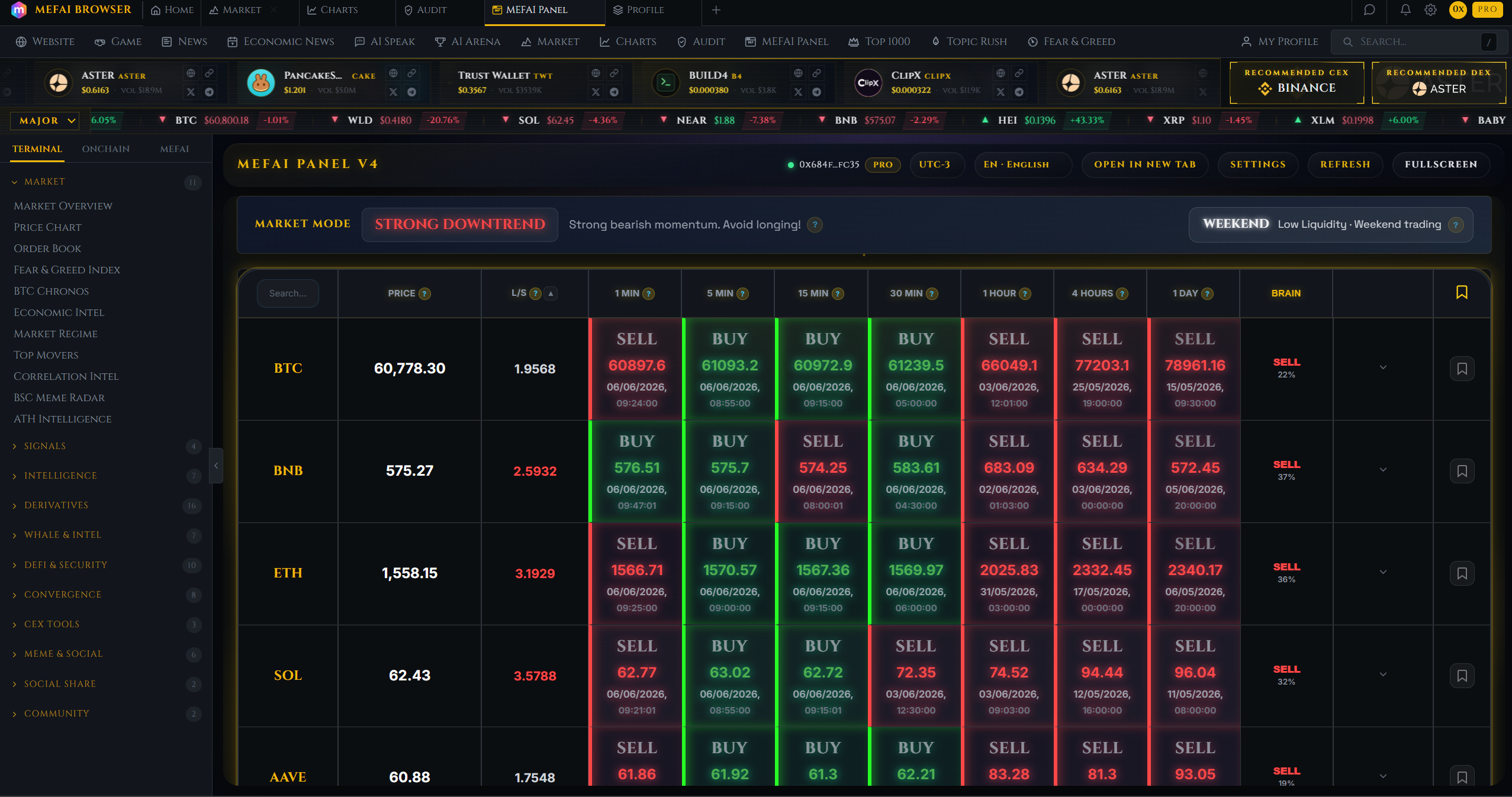
Real results from MEFAI's AI. Get $50 off the Pro plan.
Sponsored · Past performance is not indicative of future results. Not financial advice.


The challenges are magnified in emerging markets, precisely the regions Meta is initially targeting. In countries with capital controls, volatile local currencies, or underdeveloped digital banking infrastructure, the process of converting USDC can be particularly burdensome. Creators may face significant slippage on exchange rates, high withdrawal fees, or simply a lack of accessible services. In some cases, regulatory uncertainty around crypto services might force creators to use less straightforward or higher-risk methods to liquidate their earnings. The very problem Meta sought to solve—friction in global payments—is thus merely displaced, shifting from the sender to the recipient. The value arrives instantly, but its usability is delayed by the sluggishness of legacy financial systems and the regulatory patchwork surrounding digital assets.
This situation highlights a critical competitive frontier in payments innovation. The true test for the next generation of financial infrastructure will not be measured by the speed of blockchain settlement, but by the ease with which digital assets can flow into local commerce. The winners will be the companies and protocols that can build reliable, low-cost, and regulation-compliant off-ramps at a global scale. This could involve closer integration between stablecoin issuers and traditional banks, the development of sophisticated non-custodial wallets with built-in, regulated fiat gateways, or the emergence of localized, peer-to-peer liquidity networks. Meta has provided a massive injection of demand for these solutions by putting USDC into so many hands; now the market must build the exits.

From a regulatory perspective, Meta's move also places significant focus on the jurisdictional approach to stablecoin payments. Each of the 160+ countries in Meta's expansion plan will have its own rules governing cryptocurrency exchanges, foreign exchange, and cross-border money transmission. Ensuring that creators in these diverse regulatory environments can reliably convert their USDC earnings into local currency without running afoul of law is a monumental compliance challenge. It requires Meta, or its chosen partners, to navigate a labyrinth of financial regulations, potentially leading to a patchwork of services where off-ramp functionality is robust in some countries and practically non-existent in others. This regulatory fragmentation itself becomes a barrier to the seamless global experience the technology promises.
Ultimately, Meta's initiative is best viewed as a powerful catalyst rather than a complete solution. It has successfully demonstrated a new, efficient model for global creator compensation and, in doing so, has accelerated the mainstream integration of stablecoins. But in solving the disbursement puzzle, it has clearly defined the next, harder problem: building the universal bridge between the digital asset economy and the tangible world of local commerce. The success of stablecoins as a truly transformative financial tool will not be decided by their use in corporate payroll or portfolio allocation, but by whether a creator in any corner of the globe can receive their earnings in USDC and spend them as easily as any other currency. That is the race that truly matters now, and Meta has just fired the starting gun.
More in Crypto & Trading

Crypto Money Meets British Politics: The Nigel Farage Tether Gift Scandal Explained
Reform UK's Nigel Farage faces scrutiny over a £5M gift from Tether billionaire Christopher Harborne, raising questions about crypto money in politics and UK regulatory transparency.

South Korea’s Crypto Crackdown: How a Political Nepotism Probe Is Reshaping Exchanges and Regulation
A South Korean lawmaker’s alleged influence over his son’s hiring at crypto exchanges has triggered police raids and a wider probe into hiring practices at Bithumb and Upbit, signaling tougher scrutin

Bitcoin and Ether Suffer Worst Weekly Rout Since FTX Collapse as Crypto Shed $390 Billion
Bitcoin and ether posted their steepest weekly losses since the November 2022 FTX collapse, wiping out roughly $390 billion in crypto market value and triggering nearly $7 billion in leveraged liquida