
AMD's Promontory Chipset Goes Mainstream: New Expansion Cards Pack Massive I/O for Any PC
By Mag-Info Tech editorial · 2026-06-07
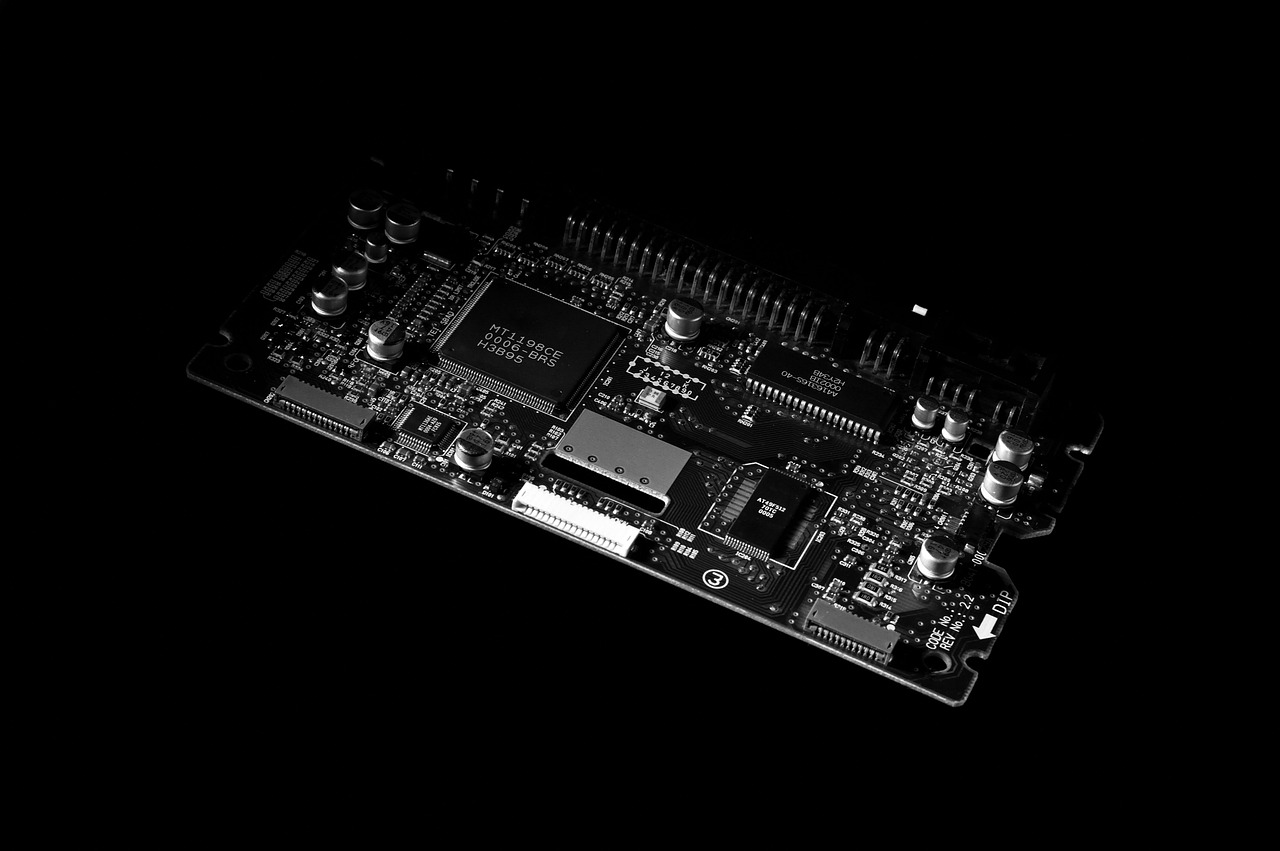
The quest for more internal storage and USB connectivity has led motherboard manufacturers to pack ever more ports onto their latest boards. But for users with older systems or specialized builds where board layout is constrained, a different solution has emerged: leveraging AMD's B650 chipset not as a primary platform, but as a powerful add-on. A wave of new expansion cards, like the recently available WisdPi PROM21, brings a substantial I/O boost by placing AMD's versatile Promontory 21 silicon directly onto a PCIe card, available for purchase starting at $199.
This development represents a maturation of a concept that has circulated in enthusiast and engineering circles. The core idea is elegantly simple: since the B650 and X670 chipsets differ primarily in the number of Promontory chips connected, a single B650 chip can be repurposed as a standalone I/O expander. By designing a card that interfaces with a standard PCIe slot, manufacturers can create a universal upgrade path. This bypasses the proprietary connectors and specific motherboard models required by earlier "upgrade kits" from some brands, making the technology accessible to a vast range of systems, from traditional desktops to compact PCs and even single-board computers like the Raspberry Pi.
The Card's Core Specifications: A Deep Dive into the Connectivity
The WisdPi PROM21 "All In Expansion Card" is the flagship example of this new category. At its heart is the AMD Promontory 21 chip, the same silicon that provides the secondary chipset lane in high-end X670 motherboards. On this half-height, single-width PCIe 4.0 x4 card, that chip is tasked with splitting the upstream connection into a wealth of downstream ports. The most prominent feature is the inclusion of four M.2 slots, all supporting PCIe 4.0 NVMe drives. This allows for the addition of four high-speed solid-state drives to any compatible system, effectively quadrupling the potential internal storage for users whose primary boards are limited to one or two M.2 slots.
Beyond storage, the card delivers a remarkable number of USB connections. It provides five USB 10 Gbps (USB 3.2 Gen 2) ports and six USB 2.0 ports, totaling eleven USB connections. This array is ideal for workstation users needing to connect multiple peripherals, lab environments with numerous test devices, or media production setups requiring various drives and audio interfaces. The inclusion of a dedicated OCuLink port adds another layer of versatility; this connector can be used directly for another PCIe 4.0 device or broken out into four SATA ports, further expanding legacy storage options. All of this connectivity is crammed onto a standard expansion card, making it a potent tool for system augmentation.
Design and Thermal Considerations: Balancing Density with Practicality
The physical layout of such a dense card introduces necessary engineering trade-offs. To manage the space, WisdPi has placed two of the M.2 slots on the front of the card, adjacent to a prominent black heatsink that cools the Promontory chip itself. The remaining two M.2 slots are situated on the back of the card. This dual-sided design is a practical concession to fit four full-length M.2 drives onto a single PCB, but it comes with a significant caveat regarding thermal management.
M.2 NVMe drives, especially high-performance PCIe 4.0 models, can generate considerable heat under sustained load. With the rear slots lacking the direct airflow and heatsink coverage of the front-mounted drives, users will need to be strategic about drive placement. Installing the most heavily used or fastest drives on the front may be necessary to prevent thermal throttling. The card's design suggests it is best suited for cases with good internal airflow, or perhaps for users planning to install drives of varying performance tiers, placing the workhorse drives in the optimal front slots. This highlights a key consideration for potential buyers: the card offers extraordinary expansion, but optimal performance requires thoughtful system integration.
Universal Compatibility: From Desktops to Raspberry Pis
One of the most compelling aspects of this technology is its broad compatibility. The card interfaces with the system via a standard PCIe slot, a interface present on motherboards from all major vendors across multiple generations and CPU platforms. While it originates from an AMD chipset, its operation at the hardware level means it is compatible with systems running Intel processors and even ARM-based boards. This universality is a stark contrast to earlier motherboard-specific upgrade kits.








Real results from MEFAI's AI. Get $50 off the Pro plan.
Sponsored · Past performance is not indicative of future results. Not financial advice.

This compatibility makes the card particularly interesting for niche and professional applications. A user with an older Intel-based workstation could add this card to gain modern M.2 and USB 3.2 connectivity without a full platform overhaul. For developers and hobbyists in the single-board computer ecosystem, the card represents a massive upgrade path. Devices like the Raspberry Pi 5, which expose a PCIe lane, can leverage this card to transform into a compact storage server or a development platform with extensive I/O—a use case the card's manufacturer, WisdPi, is specifically marketing. This breaks down the traditional silos between PC and SBC expansion possibilities.

Pricing and Market Context: Value Proposition in Perspective
At a retail price of $199, the WisdPi PROM21 card is not an impulse purchase. It is important to contextualize this cost against the value it provides. A high-quality PCIe 4.0 NVMe SSD alone can cost well over $100, and a motherboard with four or more M.2 slots is typically found in the premium segment, often carrying a significant price premium itself. Furthermore, the card includes a sophisticated chipset and controller, along with numerous USB controllers, representing a substantial amount of silicon and engineering.
For users who need the specific combination of ports it offers, the card can be a cost-effective alternative to a full system upgrade. Consider a professional needing 20TB of fast, striped NVMe storage for video editing. Purchasing a new motherboard and CPU to support the necessary M.2 slots could cost several hundred dollars more than simply adding this card to their existing, otherwise capable, system. Similarly, in a small-form-factor build where motherboard space is at a premium, this card offloads I/O expansion from the board itself, potentially allowing for a cheaper, simpler motherboard choice while still achieving the desired connectivity.

Implications for DIY Builders and the Future of PC Expansion
The emergence of these Promontory-based expansion cards signals a potential shift in how we think about PC customization and upgrades. The traditional upgrade path has often been linear: better CPU, new RAM, faster GPU, then a new motherboard. This modular approach to I/O suggests a more flexible, lateral upgrade strategy. Instead of replacing an entire motherboard for more M.2 slots or USB ports, a user could potentially extend the life and utility of their current platform with a targeted expansion card.
This trend may also spur innovation in other areas. If a $200 card can add four M.2 slots, it challenges motherboard manufacturers to reconsider their I/O offerings and pricing. It also opens doors for other chipset vendors to explore similar expansion card strategies. For the consumer, the key takeaway is an increase in choice and control. Systems are no longer as strictly defined by their motherboard's fixed set of ports. With solutions like the PROM21 card, the ability to tailor connectivity to specific needs becomes a purchasable accessory rather than an inherent, and often costly, feature of the core platform.
Conclusion
The arrival of AMD B650-based expansion cards in the retail market moves a clever engineering concept into the hands of consumers and professionals. By harnessing the Promontory 21 chipset, cards like the WisdPi PROM21 deliver an exceptional density of high-speed storage and USB connectivity via a simple PCIe slot. While thoughtful installation is required to manage the thermals of a dual-sided M.2 design, the payoff is a dramatic and universal I/O upgrade. At $199, it represents a focused investment that could be far more economical than a full platform overhaul for users with specific, high-demand connectivity needs, effectively future-proofing or repurposing existing systems with a remarkable degree of flexibility.
More in Hardware & Gadgets
ExpressVPN Advanced Drops to $83.72 for 28 Months: Why This 78% Discount Matters for Your Digital Privacy
Save over $300 on a 28-month ExpressVPN Advanced subscription that supports 12 simultaneous connections and includes advanced web protection tools for just $83.72 total.
ASML Employees Protest Musk’s Conference Invite: What It Means for Tech’s Political Divide
A group of ASML engineers is threatening to boycott the company’s internal tech conference over Elon Musk’s invitation, highlighting rising tensions between corporate events and public political debat

The Definitive Laptop Buyer's Guide for 2026: Navigating Work, AI, and Gaming
Your 2026 guide to choosing the best laptop for productivity, AI development, or gaming. We cut through the hype to match top-tier models like Dell XPS, MacBook Pro, Framework 16, and Razer Blade to y